
Best Countertop Edge Profiles for Your Home
- DDC Admin
- Jun 7
- 6 min read
A countertop can be the biggest visual surface in a kitchen or bathroom, but the edge is what gives it its finished personality. When homeowners ask about the best countertop edge profiles, they are usually trying to solve two things at once: how the space should look and how the surface should live day to day. That small detail can make a modern kitchen feel crisp, a traditional bathroom feel more refined, or a busy family space feel easier to maintain.
The right edge profile does more than decorate the slab. It affects cleaning, safety, durability, and even how formal or relaxed the room feels. If you are choosing between granite and quartz, or trying to coordinate countertops with flooring, tile, and fixtures, the edge is one of those final decisions that helps everything come together.
How to choose the best countertop edge profiles
There is no single best option for every home. The best countertop edge profiles depend on your design style, the thickness of the material, how much daily wear the surface will see, and how much detail you want in the room.
If your home leans clean and contemporary, simpler edges usually look better. If you want something classic or more custom, a shaped profile can add a little more presence. And if you have young children, sharp corners tend to move down the list quickly. This is where expert guidance really helps, because a profile that looks perfect on a sample can feel very different once it is installed across a full island or vanity.
The most popular countertop edge profiles
Eased edge
An eased edge is one of the most requested choices for good reason. It has a straight, square look with slightly softened corners, so it feels polished without looking fussy. This profile works beautifully in both kitchens and bathrooms, especially if you want the countertop to complement other finishes rather than compete with them.
It is also practical. Eased edges are easy to wipe down, they suit quartz and granite well, and they tend to age gracefully with changing trends. If you want a safe choice that still looks upscale, this is often where the conversation starts.
Pencil edge
A pencil edge has a soft, rounded top that creates a gentler line than an eased edge. It still feels simple, but it adds a bit more softness to the room. That can be useful if you have a lot of hard angles already, such as shaker cabinets, rectangular tile, or linear lighting.
Homeowners often like pencil edges because they balance style and comfort. They are approachable, family-friendly, and easy to maintain. For many homes, this is one of the most versatile options available.
Beveled edge
A beveled edge introduces an angled cut along the top edge of the countertop. It adds a subtle decorative touch while staying fairly streamlined. In the right setting, it can make a kitchen feel a little more tailored and intentional.
That said, bevels can feel more tied to certain design periods than eased or pencil edges. If you are renovating with resale in mind and want the broadest appeal, a beveled edge can work, but it should match the rest of the room. It tends to look best when the cabinetry and overall design have some structure and formality.
Bullnose and half bullnose
Bullnose edges are fully rounded, while half bullnose edges soften only part of the profile. These options create a smoother, more curved appearance that some homeowners love in bathrooms, laundry rooms, and family homes.
The softer shape can be appealing from a safety standpoint, especially around children. The trade-off is that a full bullnose can look more traditional and sometimes less current in a sleek modern kitchen. A half bullnose often feels like a good middle ground because it keeps some softness without becoming too rounded.
Ogee edge
If you want a countertop to feel more decorative and high-end, an ogee edge brings that classic furniture-style detail. It has an S-shaped curve that instantly adds elegance and works especially well in traditional kitchens, statement islands, and more formal bathroom designs.
An ogee edge is not usually the first recommendation for every project. It is more detailed, often more expensive, and can feel out of place in a minimalist space. But in the right home, it creates a beautiful custom look that elevates the entire room.
Mitered edge
A mitered edge is designed to make the countertop appear thicker and more substantial. This is especially popular in contemporary homes where clients want the look of a bold slab without a heavily decorative profile. It creates a strong architectural presence and can make an island feel more luxurious.
This style works particularly well when you want clean lines and visual weight. It is often chosen for dramatic kitchen islands, waterfall installations, and spaces where the countertop is meant to be a major design feature.
Best countertop edge profiles by design style
If your style is modern, transitional, or Scandinavian-inspired, eased and pencil edges are usually the strongest fit. They keep the look clean and current, and they let the beauty of the stone or quartz stand out.
If your home is more traditional, classic, or farmhouse-inspired, beveled, half bullnose, and ogee edges may feel more natural. These profiles add shape and softness that pair well with warmer details, decorative lighting, and richer cabinet finishes.
For luxury custom homes, mitered edges are often a standout choice. They bring scale and sophistication without adding ornamental detail, which makes them especially attractive in large kitchens with statement islands.
What works best for granite and quartz
Granite and quartz can both support a range of profiles, but the overall effect may differ. Granite often looks especially rich with profiles that showcase craftsmanship, such as beveled or ogee edges. Quartz tends to pair beautifully with simple edges because its consistent pattern and clean finish already deliver a refined look.
That does not mean quartz cannot carry a more detailed profile or granite cannot look beautiful with a simple edge. It just means the material itself should be part of the decision. A heavily patterned slab with a decorative edge can sometimes feel too busy, while a quieter material may benefit from a little more shape.
Practical things homeowners should not overlook
Edge profiles are not just about appearance. Cleaning matters. So does comfort. So does how the edge will hold up around stools, kids, groceries, and everyday life.
Simpler profiles are generally easier to maintain because there are fewer grooves or curves to catch crumbs and spills. More detailed edges can be stunning, but they may require a little more attention. Safety also matters. Sharper-looking edges are not necessarily dangerous when properly finished, but many families still prefer a softer profile for peace of mind.
Budget can also influence the choice. Basic profiles are usually more cost-effective, while decorative or thicker-looking edges often add fabrication cost. If you are renovating more than one space at once, that difference can matter. Sometimes the smartest move is choosing a simpler edge in secondary spaces and investing in a more custom look for the kitchen island or primary bath vanity.
Seeing the edge in the full design
A countertop edge should never be chosen in isolation. It needs to make sense with the cabinet door style, backsplash, sink, faucet, flooring, and overall feel of the home. A profile that seems minor on paper can shift the tone of the whole project once everything is installed.
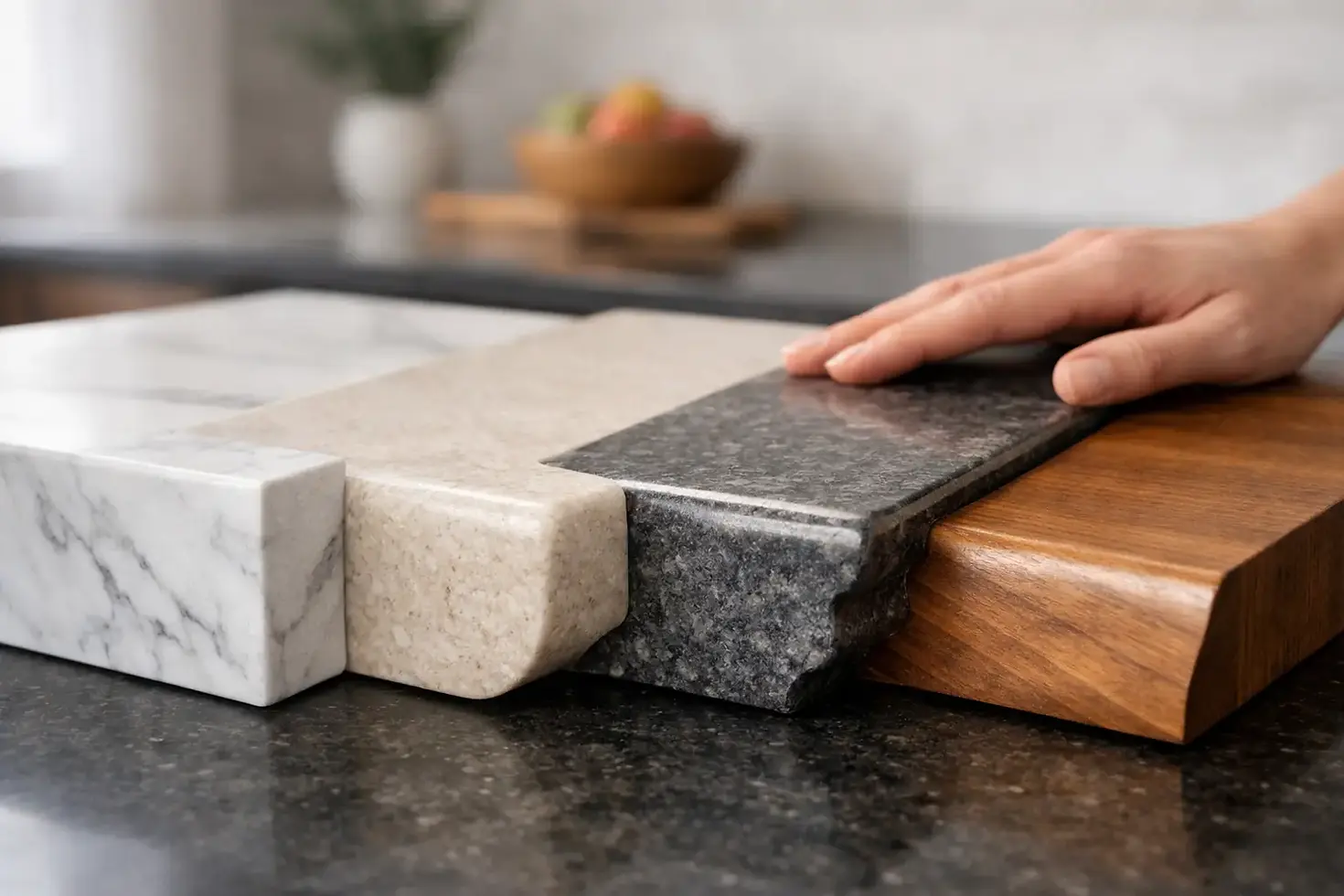
This is why a showroom experience can be so valuable. When you can compare countertop materials with tile, flooring, and fixtures in one place, the decision becomes much clearer. At Deluxe Design Center, homeowners often find that the right edge profile becomes obvious once they see it with the rest of their finishes rather than as a standalone sample.
The edge that feels right is usually the right one
Most homeowners do not regret choosing a timeless profile that fits the way they live. If you want a clean, lasting look, start with eased or pencil edges. If you want more character, explore beveled, half bullnose, or ogee. If you want bold visual impact, a mitered edge may be the detail that gives your kitchen its signature look.
The best choice is the one that makes your countertop feel finished, your design feel cohesive, and your home feel more like yours. When those pieces line up, even a small detail like the edge can make the whole room feel beautifully complete.


Comments