
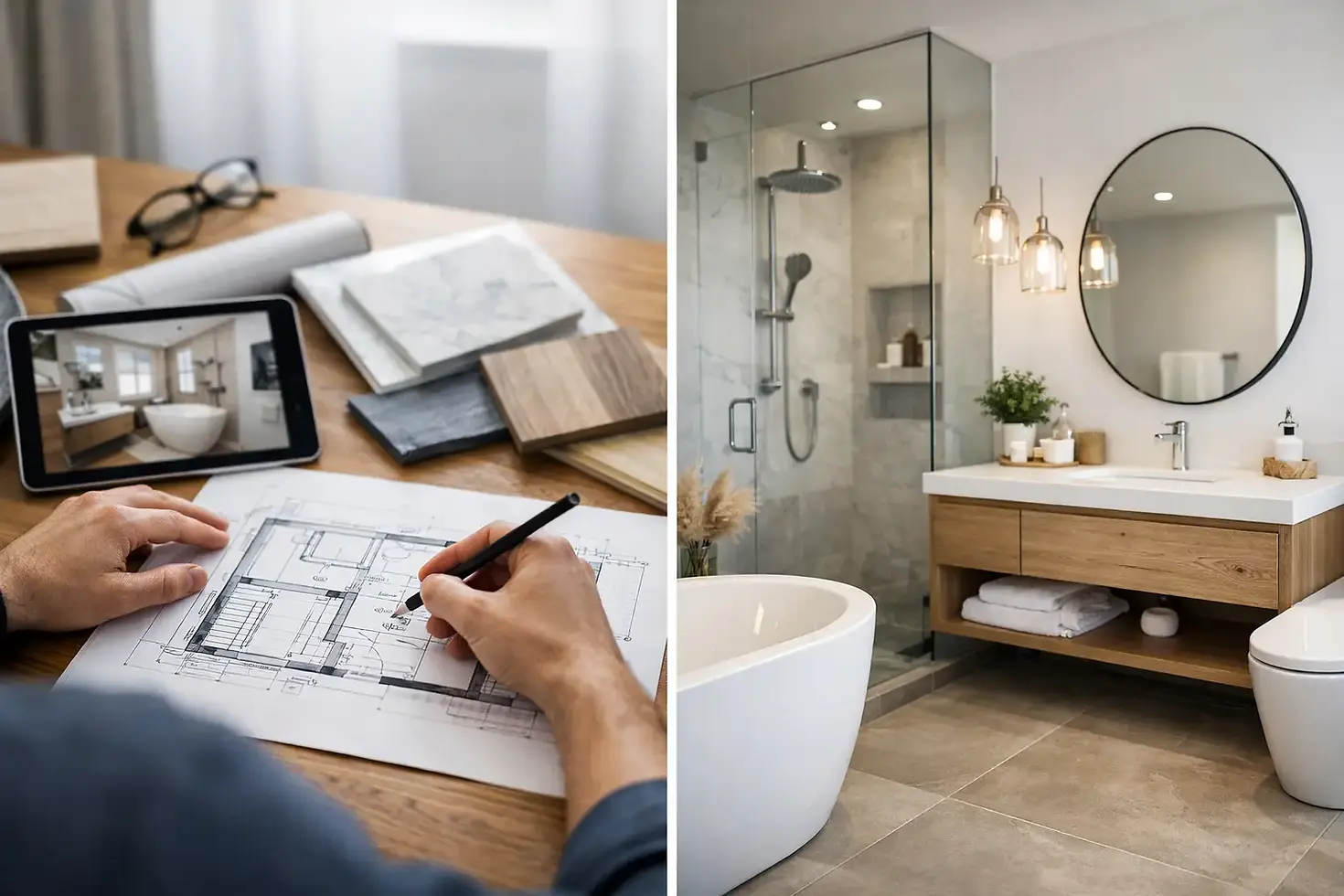
How to Design a Bathroom Remodel That Works
A beautiful bathroom can still be frustrating if the vanity feels cramped, the lighting is harsh, or the tile looked better in a sample than it does across the whole room. That is why learning how to design a bathroom remodel starts with more than picking finishes. The best remodels feel calm, functional, and well considered every time you use them.
For most homeowners, the challenge is not a lack of ideas. It is narrowing down choices and making sure everything works together. Layout, storage, lighting, surfaces, plumbing fixtures, and budget all affect each other, so the design process needs to happen in the right order.
How to design a bathroom remodel from the ground up
Start by being honest about what is not working in your current bathroom. Maybe the room feels dated, but often the bigger issue is daily use. You may need better storage, easier cleaning, more counter space, a larger shower, or materials that stand up to moisture and wear.
This first step matters because a remodel built around real-life needs will age better than one based only on trends. A family bathroom has different priorities than a private ensuite. A guest bath can lean more decorative, while a primary bath usually needs comfort, convenience, and durability to lead the design.
Once you know the purpose of the remodel, define your non-negotiables. That might mean a double vanity, a curbless shower, in-floor heating, better task lighting, or tile that is easy to maintain. If everything is a priority, the project gets harder to manage. A clear list helps you make better trade-offs when budget or space creates limits.
Start with layout before finishes
One of the most common mistakes in bathroom design is choosing tile, countertops, or faucets before settling the layout. It is understandable because finishes are exciting. But layout determines whether the room actually functions well.
Think first about movement through the space. Can doors open comfortably without hitting a vanity or toilet? Is there enough clearance in front of drawers? Does the shower feel easy to enter, or does the room feel pinched? Even a compact bathroom can feel much more polished when spacing is intentional.
Plumbing locations also shape the budget. Keeping a toilet, shower, or vanity in the same general area can reduce labor costs. Moving everything may give you a better floor plan, but it only makes sense if the result truly improves the room. Sometimes a modest layout adjustment creates a big upgrade without pushing the project further than needed.
If the bathroom is small, focus on visual openness. A floating vanity, large-format tile, a glass shower enclosure, and consistent finishes can make the room feel more expansive. In a larger bathroom, the goal is often the opposite. You want warmth and balance so the space does not feel cold or empty.
Choose a style that can carry the whole room
A strong bathroom design does not need to be complicated. It just needs a clear direction. Before you select products, decide on the overall feeling you want the room to have. Clean and modern, warm and natural, classic and tailored, or soft and spa-like are all valid starting points.
This is where many homeowners benefit from seeing materials together instead of shopping piece by piece. Quartz countertops, wall tile, flooring, shower finishes, and faucets should relate to each other in tone and scale. They do not need to match exactly, but they should feel like they belong in the same room.
When planning how to design a bathroom remodel, it helps to choose one lead finish and build around it. In some bathrooms, that is the vanity. In others, it is a statement tile, a quartz counter, or a feature wall in the shower. Once that anchor is chosen, the remaining selections become easier and more cohesive.
Trend awareness is helpful, but chasing every current look can date a bathroom quickly. If you want a design that lasts, keep permanent materials more timeless and use mirrors, hardware, paint, or lighting for personality. Tile and counters should still feel right years from now.
Materials matter more in a bathroom
Bathrooms work hard. Moisture, humidity, daily cleaning, and temperature changes all affect how materials perform over time. That is why design decisions here need to balance appearance with practicality.
For countertops, many homeowners prefer quartz because it offers a polished look with low maintenance. It pairs well with a wide range of bathroom styles and holds up beautifully in busy households. Natural stone can also be stunning, but it may require more upkeep depending on the material and finish.
Flooring should feel secure underfoot and suit the way the room is used. Tile remains a popular choice because of its durability and water resistance, and heated flooring can make a major difference in comfort, especially during colder months. If you are choosing wall tile and floor tile together, think about contrast carefully. Too much pattern in both places can make the room feel busy, while too little variation can flatten the design.
Shower surfaces deserve extra attention. This is one area where homeowners often regret choosing something beautiful but hard to clean. Grout lines, tile size, texture, and niche details all influence maintenance. There is no single right answer, but it helps to weigh how much upkeep you want along with the final look.
Lighting, storage, and mirrors do more than you think
A well-designed bathroom is rarely defined by tile alone. Lighting and storage often make the biggest difference in how the space feels day to day.
Good bathroom lighting should do three jobs at once. It should provide overall brightness, clear task lighting at the mirror, and a softer layer for comfort. Relying on one ceiling fixture usually leaves shadows where you do not want them. Sconces or balanced vanity lighting can improve both function and appearance.
Storage should be planned early, not squeezed in at the end. Drawers are often more useful than deep cabinets because they make everyday items easier to reach. Built-in niches, tall linen storage, medicine cabinets, and organized vanity interiors can all help reduce clutter. Even a beautiful remodel will feel unfinished if toothbrushes, products, and towels have nowhere to go.
Mirrors also change the room more than people expect. They affect light, proportion, and style. A larger mirror can make a compact bathroom feel more open, while framed mirrors can add warmth and definition in a more classic design.
Budget for the parts you touch every day
When homeowners think about budget, they often focus on the most visible surfaces first. That makes sense, but it should not come at the expense of function. Spend thoughtfully on the pieces that shape daily use, like the vanity, countertop, shower system, flooring, and lighting.
There are always trade-offs. A larger custom shower may mean scaling back a decorative tile choice. A premium countertop may lead you toward a more understated backsplash or simpler hardware. The goal is not to choose the most expensive option in every category. It is to invest where quality will be seen, felt, and appreciated over time.
This is also where a coordinated showroom experience can save both money and stress. Seeing materials together, comparing tones in person, and getting guidance on product combinations often leads to better decisions than ordering from several places and hoping everything works once it arrives. For homeowners in Southern Alberta, a one-stop showroom like Deluxe Design Center can make the selection process much more manageable.
How to avoid a remodel that looks good but feels off
If a bathroom remodel misses the mark, it is often because the room was designed in parts instead of as a whole. The faucet was chosen separately from the vanity, the vanity separately from the tile, and the tile without enough thought about lighting or scale. Each piece may look good on its own, but the room does not come together.
To avoid that, step back and review the full picture before final decisions are made. Look at undertones, finish consistency, sightlines, and transition points. Ask whether the room will still feel practical during a rushed weekday morning, not just in a staged photo.
It also helps to think beyond the bathroom itself. If the remodel connects to a bedroom, hallway, or adjoining flooring, the design should feel intentional with the rest of the home. The best results do not feel isolated. They feel naturally integrated.
A bathroom remodel is a chance to improve more than style. It is a chance to make everyday routines easier, more comfortable, and a little more luxurious. When the design is grounded in how you live, the finished space does more than look updated. It feels like home in exactly the right way.


Comments